No such thing as too much ground work!

The topic today is slowing down the speed demon.

We all know of or had that horse that just won’t slow down under saddle. Most of the time it’s a green broke youngster who had yet to learn their own body control. In some cases this issue is found in barrel horses, speed even horses such as Thorobreds and even the hot Arabians. This method works with the speed demons.

First teach the horse proper manners in the round pen and voice command stop so you know you have control before adding speed.

Get them used to lunging in a round pen that’s not oversized so the horse has to use its body to keep itself under control. Start at the trot and once the trot is slow then ask for more speed. Once the horse is going slow a few steps at the trot, stop and praise then end your lesson. Do the same at the canter. Keep them going around but don’t push unless they break gait to a trot. Once they slow a few strides ask them to stop, praise them then end the session.

*if your horse is sweaty always hand walk them out until cool to the touch before putting them away*

Be patient, don’t ask for too much and understand they have to build certain muscles in order to slow down. Reward the slightest try.

Tips when training the young horse

A lot of people can start their own horses. It takes patience and dedication. The horse is usually solid at the walk, trot and lope but nothing polished or fancy. The goal for that phase of training is simply “don’t get hurt” and “make progress while keeping the horse happy”. Once they are started, people hit a road block and don’t know how to move onto the next step. The next step varies from trainer to trainer. I prefer to add lateral movement, get the horse yielding to leg pressure and softening its face and neck and carrying itself more rounded not hollow with its head up.

Adding leg pressure for yielding the horse immediately speeds up. That’s normal, we taught him that after all. Now we want to show him the difference between one leg pressure and both legs. Both legs squeezing means to move forward, one leg squeezing means move away from that leg but don’t speed up.

How is this achieved? I introduce it at first on the ground asking for forehand turns and haunch turns. This way the horse knows to yield from the ground first. Then I try it under saddle by asking to haunch turn and forehand turn under saddle. I reward with release with the slightest try from the horse. Once the animal understands that we move onto asking for the bend on the rail at the walk.

*these steps don’t happen in one day! Work on each step until your horse is confident enough to move on*

Once you’re on the rail at a walk I simply just ask the horse to move into the corners of the arena with my inside leg and inside rein. This asks for the horses nose to the inside but your leg keeps him moving away from you deeper into the corner. Once he moves away from your leg praise by release immediately and I love to scratch their neck for reward.

Don’t expect miracles. Just reward the slightest try then one day your horse will figure it out and that is the goal! Let the horse figure it out with you as their guide. They are smart, they all figure it out. Be patient.

Once the horse yields to pressure this way it’s a gateway to adding natural collection, softness and full body control!

Have fun with this make patterns up and always reward the slightest try.

Raise them right!

Raising a horse is time consuming, yes but oh so rewarding!

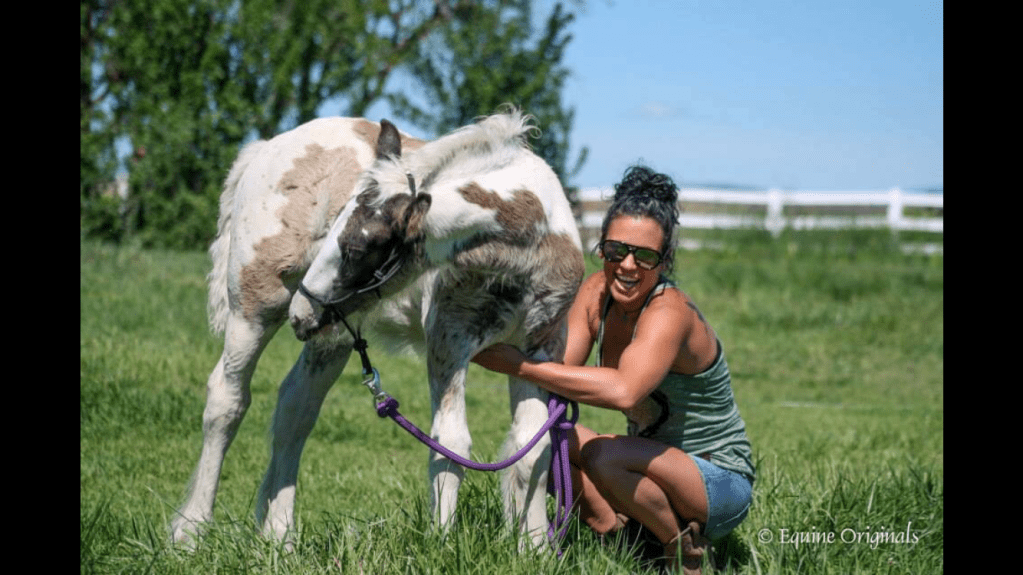
Most folks like to buy the broke horse so they can ride right away. That’s fine, we’ve all been there but as you learn and grow, in time, you most likely will find that foal you can’t live without. When that time comes we all think the same thing, “I love it but it will be years before I can ride it”. Instead of thinking that way look at it in this perspective. Behind every broke horse there was someone waiting for it to get old enough to ride. Why not be that person to show the little one about life and share in its experiences and laugh at the little quirks. Get to know what makes them unique and help them grow and learn so when the time comes that they become a riding horse you can trust in your bond and relationship that the horse will trust and take care of you.

It’s a feeling like none other. Raising and walking this beautiful animal through life. You’re their mom now they look up to you.

When others see a broke horse and well behaved horse citizen you’ll still see that cute and clumsy little horse you raised. And that will never change 🙂

Happy tummy! Yummy grass!

Horses in boarding facilities or training barns that live in stalls and get worked daily are very healthy and well cared for even if they aren’t allowed on pasture until summer. That being said, hand grazing them around the barn after a workout helps in many ways! They get to enjoy time outside, they are bonding with you, it’s great to get fresh air away from the dry dusty barn and of course they get to enjoy delicious, fresh grass! Too much grass for the stabled horse can cause issues but hand grazing them for up to an hour a day is good for them. The fresh, wet grass helps with stable cough, lubricates their stomach for healthier digestion and provides a treat outside of their usual hay and grain regimen.

If you hand graze your stable horse a few times a week for up to an hour they will be ready for turn out when it dries out without worry.

If your horse is turned out for long periods on spring or fresh fall grass be sure to decrease your proteins and sugars you feed your horse normally. This will help your horse adjust to the elevated levels of sugars in the new grass. Too much fresh grass can easily cause a healthy horse to founder. The first sign of founder is if their hooves are hot or warm to the touch. Remove the horse from pasture immediately and don’t feed it dinner. Keep ample water available and call your vet. If caught in time there will be minimal lasting effects.

Grass is a special treat for the stabled horse. Keep an eye on how your horse is effected and customize your feed plan and how long it’s turned out and you’ll have a happy horse with a happy tummy 🙂

Visit even if you can’t ride

Horses in boarding facilities, on average, stare at their stall walls 22 hours of the day waiting for you. You see you horse everyday and spend about two hours a day with your horse (husband willing). You’re the best thing other than feeding time that your horse gets to experience on the daily.

If more horse owners understood this there would be much stronger bonds with horse and their humans. PERIOD.

Think about this next time you visit your horse. You’re his entire world. You are the sole reason they are healthy and alive. You drop the ball, they are at your mercy. Treat them as such. They can’t say thank you or I miss you. They SHOW it. SHOW them you UNDERSTAND. That’s all they want.

Companionship. That’s what makes them “tick”. Like a clock, they are here because of YOU.

Don’t ride and work them so hard they are sweaty. Sometimes just go spend time with them, bring them out to grace, let them be horses in the pasture with you. Be a herd member be their leader. They love you more than you realize. They love you when you look and smell like a foot. They don’t judge they don’t criticize.

Next time you’re at the barn, tell them about your day. Cry on them when the world seemingly is against you. They are always there.

If you can’t catch your horse you need to do more of these things to show your appreciation. Don’t just ride. Visit them. Be the herd leader and herd member they see you for.

If you’re demanding perfection every time they see you and you only catch them so you can ride it’s basically a one sided relationship.

Visit don’t just ride. Find their favorite itchy spot. Sit with them and just watch them be themselves.

Be the person they need you to be and they, in turn, will be the horse you need them to be. It’s a partnership.